
By Donnelly McCleland
Scientific American reports that: “2019 is very likely to be Earth’s second warmest year on record, behind 2016.” Based on statistics gathered, “the six warmest years on record globally since 1880 will end up being the last six years—2014 through 2019—with the peak occurring during the strong El Niño year of 2016.” According to a report by the Internal Displacement Monitoring Centre (IDMC), released in September 2019, a record seven million people have been displaced globally due to natural disasters including storms and floods between January and June 2019 and the number is estimated to more than triple by the end of the year to around 22 million. More than 950 climate-related disasters in 102 countries and territories forced seven million people — most of them in Asia and Africa — to flee their homes. It is the highest mid-year figure ever reported for displacements associated with disasters, said the report. It was also noted that July 2019 was the hottest month the planet has ever experienced (since record keeping).
According to Down to Earth: “Between January and June 2019 extreme weather events across the world broke the century-mark. Six out of the seven continents recorded extreme weather — heatwave, coldwave, floods, drought, cyclones, forest fires, hailstorms or lightening — as not seen in 50-100 years in the first half of the year.”
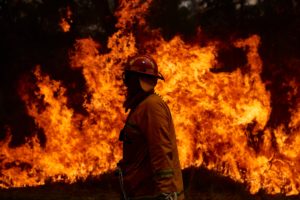 Wildfires have been making headlines throughout the year – fires in the Amazon sparked a global outcry, but fires have also been blazing in the Arctic, France, Greece, Indonesia as well as many other areas in the world. Greenpeace estimated that massive blazes in Siberia have released almost as much carbon dioxide (CO2) as the annual emissions of 36 million cars. The Sentinel-3 World Fire Atlas showed 70,000+ fires in August 2019, compared to just over 16,632 fires in August 2018.
According to Scientific American: “The 2019 tally of billion-dollar weather disasters was 25 as of the end of October. Ten of these disasters were in the US, making it the fifth year in a row for ten or more billion-dollar weather disasters—an unprecedented occurrence. Some examples this year’s worst billion-dollar weather disasters are listed below:
- Typhoon Hagibis (1-2 October) $10+ billion, 95 killed
- Flooding, India (1 June – 5 October) $10+ billion, 1,850 killed
- Hurricane Dorian, Bahamas, US, and Canada, (31 August – 7 September) $7+ billion, 664 dead or missing
- Cyclone Idai, Mozambiqe, Zimbabwe, Malawi (2-18 March) $2 billion, 1007+ killed
Resilience to climate change
A recent report (November 2019) produced by The Economist Intelligence Unit states that the global economy will be 3% smaller than baseline projections by 2050, mainly due to climate-related impacts. It goes on to say that at a country level, climate research indicates that those countries that are poorer and have higher temperatures will be most affected. They make the statement: “Being rich matters when it comes to minimising the economic impact of climate change.” The report goes on to explain that institutional quality also matters greatly for a country’s resilience to climate change, especially in respect to adaptation and mitigation policies. The report indicates that regionally, Africa will be the hardest hit by climate change. They explain that developing nations are most vulnerable for a number of reasons. “While geographic exposure to global warming tends to be higher in these countries—nearly all low-income countries are tropical—the state of their infrastructure, their economic structure and governance factors also play an important role in their vulnerability to global warming. Poor quality of infrastructure and housing make these countries less resilient to extreme weather. Developing countries also tend to have a large share of their GDP in the agricultural sector—which is primarily subsistence and rain-fed cultivation making them particularly vulnerable to climate change.”
Global climate strikes
“Climate strike” has been crowned word of the year by Collins Dictionary. The term, which refers to people leaving work or school as a way to demand action on climate change, was used 100 times more often in 2019 compared to last year, Collins’ lexicographers found. The company says that they monitor a 9.5 billion-word body of text each year to identify “new and notable” words that reflect big shifts in culture.
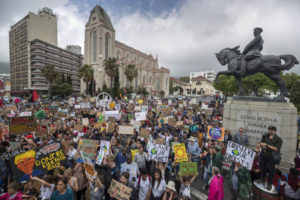 About 1.6 million students walked out of classrooms in a coordinated day of ‘strikes’ across more than 120 countries in March. 20-27 September 2019 saw a record 7.6 million people take to the streets and ‘strike’ for climate action – the biggest climate mobilisation in history. The millions of people around the world participating in these global climate ‘strikes’ have been inspired by teen activist Greta Thunberg. The day began in the Pacific and Asia and culminated in a massive demonstration in New York.
This year’s climate strikes aren’t over yet; there are more protests planned ahead of the annual United Nations climate conference taking place in Madrid this December.
The climate change debate rages on
Scientists have been warning about severe global impacts from climate change for more than three decades. But over the past 12 months those warnings have intensified. Last year, a panel of scientists convened by the United Nations released a report that found that the world had 12 years left (11 now) to dramatically cut down its use of fossil fuels in order to avoid the most catastrophic effects of climate change. For many, increasingly more destructive wildfire and hurricane seasons have made the risks associated with climate change hit much closer to home.
In December 2018, the Global Carbon Project projected that carbon dioxide emissions worldwide reached an all-time high in 2018, up more than two percent after three years of almost no growth. A January 2019 US Energy Information Administration (EIA) report estimated an increase of nearly 3% in 2018 energy-related carbon dioxide emissions, the largest jump since 2010—reversing a trend that had seen three consecutive years of decline.

In April, a NASA-funded study of the Greenland ice sheet found the mass loss of ice discharged into the ocean from glaciers on the world’s largest island had increased six-fold since the 1980s. Later, a severe mid-summer Arctic heat wave contributed to historic melting of the Greenland ice sheet, with 12.5 billion tons of ice melting into the ocean on a single day—the “biggest single-day volume loss on record,” according to the Washington Post.
Significantly, in early November 2019, the Trump administration formally began withdrawing from the Paris climate accord, making the US the only country in the world which is not signed up to the pact to keep the global average temperature below 2°C above pre-industrial levels.
FROM A CHRISTIAN PERSPECTIVE
Climate change seems to polarise Christians. Conservative Christians have long opposed climate science, saying human-induced warming goes against God’s omnipotence. According to an article in the Bulletin of the Atomic Scientists, ‘Why conservative Christians don’t believe in climate change’: “An analysis of resolutions and campaigns by evangelicals over the past 40 years shows that anti-environmentalism within conservative Christianity stems from fears that stewardship of God’s creation is drifting toward neo-pagan nature worship, and from apocalyptic beliefs about ‘end times’ that make it pointless to worry about global warming.”
But, there is a long history of religious thinking and attention to the role of humans as stewards of the Earth and the environment. The theological underpinnings often stem from the idea that God created Earth and humans, therefore, God’s children have a responsibility to care for His creation. This perspective is shared across a number of faiths. In June 2015, Pope Francis issued an encyclical (a letter concerning Catholic doctrine) urging Catholics and all people on Earth to focus on a broad range of issues and problems in the environment including pollution, climate change, biodiversity and global inequality of ecological systems.
 Since climate change can be a controversial topic among believers, it is important to note that the following is a Christian perspective, and not the perspective. It has been sourced from an international Christian nature conservation organisation called A Rocha (Portuguese for ‘the Rock’). A Rocha is identified by five core commitments and to a practical outworking of each: Christian, Conservation, Community, Cross-cultural and Cooperation[1].
They begin by asking some important questions: “Why does climate change action divide Christians? Why do some believe it is a satanic plot whilst others see it as a crucial moral issue? Why do so many more simply ignore it as irrelevant to their faith and daily lives? Is Christianity a purely spiritual battle or does it impact how we treat the earth and the poorest? Which matters more to God, economic and individual libertarianism or justice and the integrity of God’s creation?”
They go on to respond to some believers’ concerns by looking at Scripture.
“In biblical times people saw a clear and direct link between human sin and environmental chaos. Hosea 4:1–3 is one of several passages that speak of climatic change leading to collapsing harvests and wildlife extinctions due to God’s people’s failure to keep God’s laws. It was only the secular thinking of Bacon, Descartes and the Enlightenment that separated the spheres of nature and culture and assumed humanity could see itself as separate from and act independently of nature. Today we need to recover the biblical worldview that humanity and the earth’s systems are deeply interconnected and interdependent.
There’s a strong correlation between Christian scepticism of climate science and rejection of other ‘mainstream’ science, such as on evolution. Yet, committed bible-believing Christians including Sir John Houghton and Dr Katharine Hayhoe are leading climate scientists. Science, when done honestly, carefully, and with peer review is a friend, not an enemy, of biblical faith. It is simply thinking God’s thoughts after Him, as Johannes Kepler observed.
Some argue that since Jesus – not the disciples – calmed the storm (Mark 4:35–41) all our climate action is pointless: We should pray and leave it to God! It’s true that human action alone won’t save the planet, but God chooses to work through people. God’s saving plans in the climate catastrophe of Noah’s flood involved human action. As those called to reflect God’s image, we’re called to reflect God’s character in servant leadership (‘dominion’) over the earth and its creatures. Romans 8:19 reminds us that creation is waiting for God’s children to be revealed – in other words for the Church to stand up and take action. Both climate scepticism and the more widespread apathy and inaction in many churches, are denials of our biblical call to serve and preserve the goodness of God’s world (Genesis 2:15).”
Dr Hugh Ross (founder/president of the ministry Reasons to Believe, is an astrophysicist and Christian apologist specialising in Bible-science issues) says: “God put the human race in charge of managing the resources of the entire planet for the benefit of all life. Therefore, we of all people on this planet should be concerned about environmental issues and doing what we can to enhance the beauty and productivity of the natural realm.” He goes on to caution: “It [global warming/climate change] is a very complicated issue with many contributions, both natural and human, and we can easily make a mistake by putting too much emphasis on one factor and ignoring other factors. The potential in many environmental issues is that if you undertake corrective action without appropriate understanding of the problem then you wind up doing more harm than good. I think a measure of humility is necessary here to realise we are not as smart as God and He understands the whole issue. I think that there is a tendency in our human context to simplify the problem and not realise how delicately balanced everything is.” He then ends by saying: “We also need to realise that there’s a reason why God wanted us to have a global high-technology civilisation and that was to quickly fulfil the Great Commission. So, I say to believers, let’s take advantage of these benign [climate] conditions that God has given us, recognise that God has given it to us, and fulfil the purpose that He has given us to do.”